When the Bad Guy Has the Better Story: Anime Villains Who Outnarrated the Hero
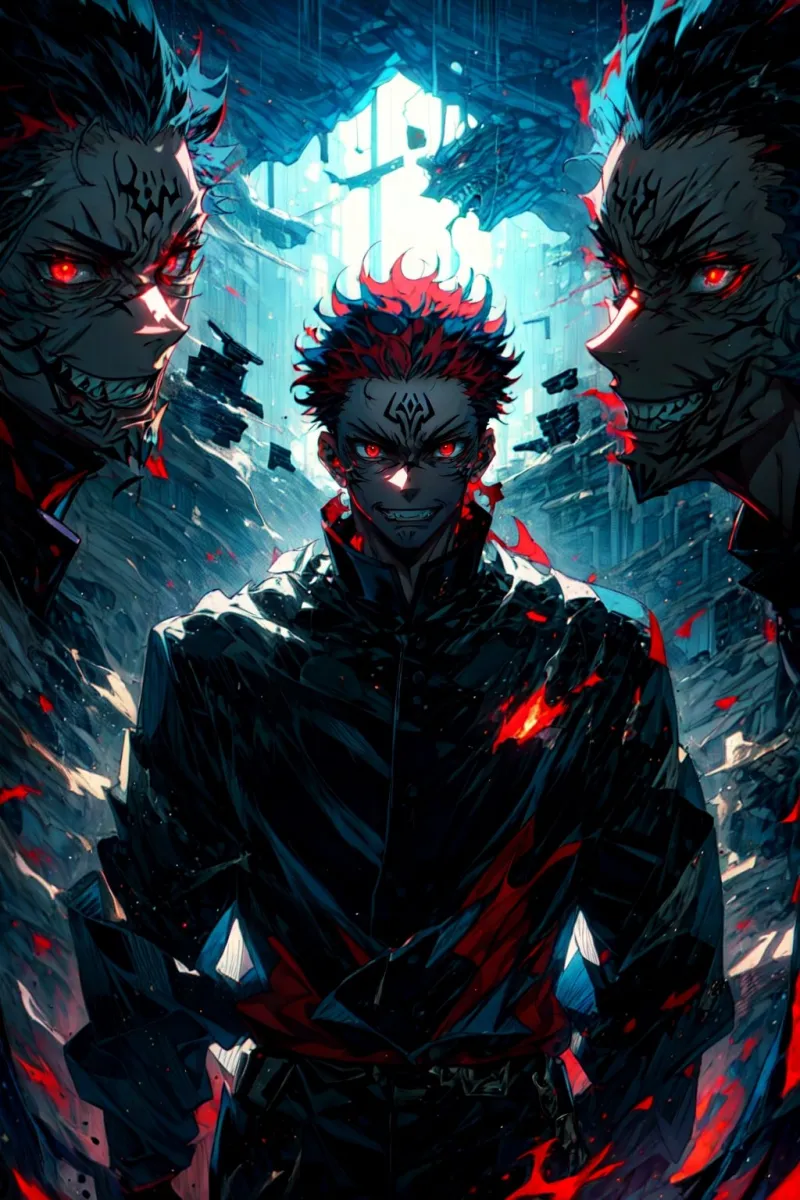
Photo: anime villain dramatic confrontation dark atmosphere, via image.tensorartassets.com
There's a weird thing that happens sometimes when you're watching anime. You're supposed to be invested in the hero — their growth, their pain, their eventual triumph — but your eyes keep drifting toward the other side of the conflict. The villain is just... doing more interesting things. Feeling more complicated emotions. Making choices that actually cost something.
This isn't a rare glitch. It's practically a genre tradition at this point. And it raises a genuinely fascinating question: what does it mean when the antagonist carries the emotional weight of a story that was never technically theirs to carry?
The Setup Problem Every Protagonist Has
Here's the core tension. Protagonists in anime — especially shonen — are often designed to be aspirational. They're blank enough to project onto, determined enough to admire, and optimistic enough to keep the tone from getting too grim. That's a functional creative choice, but it comes with a cost. Relatability through simplicity often means sacrificing the kind of moral messiness that makes a character genuinely fascinating.
Villains don't have that problem. They're already operating outside the rules. They can be contradictory, selfish, grieving, brilliant, and wrong all at the same time — and the story doesn't need to resolve those tensions neatly because their arc isn't required to end in triumph. That freedom is narratively enormous.
Light Yagami and the Show That Knew What It Was Doing
Let's start with the most obvious example, because it earns the attention. Death Note is technically framed as a cat-and-mouse thriller where Light Yagami is the character we follow most closely. But calling him the protagonist is already a stretch — he's the story's center of gravity, not its moral compass. L functions as the hero by default, but even he's more archetype than person.
What Death Note gets right is that it never pretends Light's descent is anything other than the main event. The writing team understood that watching a genuinely intelligent person rationalize their way into becoming a monster is more compelling than watching someone fight against one. The show's tension doesn't come from "will the hero win" — it comes from "how far gone is Light right now, and does he even know?"
That's villain-as-protagonist storytelling done with full intentionality. But not every series is that self-aware.
Griffith, and the Tragedy That Overshadowed Everything Else
Berserk is technically Guts' story. He's the one swinging the massive sword, carrying the trauma, surviving the impossible. But ask most fans which character they find more haunting, more psychologically layered, more narratively essential — and Griffith's name comes up constantly.
The reason is straightforward: Griffith's fall is the engine of everything. His ambition, his friendship with Guts, his inability to reconcile what he wants with what he's willing to sacrifice — all of it builds toward a moment of betrayal so catastrophic that it retroactively recontextualizes the entire story. Guts is defined by surviving what Griffith did to him. Griffith is defined by the choice itself.
That's not a knock on Guts as a character. His resilience and rage are genuinely compelling. But the narrative tension in Berserk lives in understanding Griffith, not in following Guts. The villain's psychology is the story's actual architecture.
Morally Complex Dramas and the Antagonist Advantage
This pattern shows up across genres. In Code Geass, Lelouch is framed as a protagonist but functions narratively as an antihero whose methods become increasingly indefensible — while Suzaku, positioned as the idealistic foil, carries enough genuine conflict to fuel a separate series entirely. The show's best moments aren't about who's winning the war. They're about watching two people with incompatible moral frameworks destroy each other trying to be right.
Vinland Saga pulls a similar trick in its second arc. Askeladd, who is technically the antagonist of the first season, ends up being the thematic cornerstone of the entire series. His death doesn't just affect Thorfinn — it redefines what the show is even about. Everything after it is essentially the story asking: now that the most interesting person in the room is gone, what do we do?
What This Reveals About Anime Storytelling
These examples aren't flukes. They point to something structural. Anime — particularly long-form serialized anime — often develops its villains across enormous amounts of screen time. Backstory episodes, motivation reveals, quiet moments of humanity before the inevitable confrontation. All of that investment creates emotional attachment whether the writers intend it or not.
The hero, meanwhile, is often grinding through power-ups and training arcs. Their development is mechanical: get stronger, face the next challenge, repeat. It's satisfying in its own way, but it's not the same as watching a character wrestle with the consequences of their own ideology.
There's also the matter of stakes. A villain's arc typically ends in death, defeat, or some form of irreversible loss. That finality gives their journey weight that a protagonist — who needs to survive for the next arc — often can't access.
The Takeaway for Fans
None of this means the hero is bad or that the shows are broken. It means that some of anime's most ambitious storytelling happens in the margins of its own framing. The villain gets to be the most human person in the room, and that's a creative choice worth recognizing.
Next time you find yourself more invested in the antagonist than the main character, don't fight it. The writers might have put something genuinely special there — intentionally or not. And sometimes the most honest reading of a story is the one that admits where the real emotional weight is actually sitting.