Bought, Shelved, Forgotten: Why Western Publishers Keep Abandoning Manga Mid-Story — and What Fans Are Doing About It
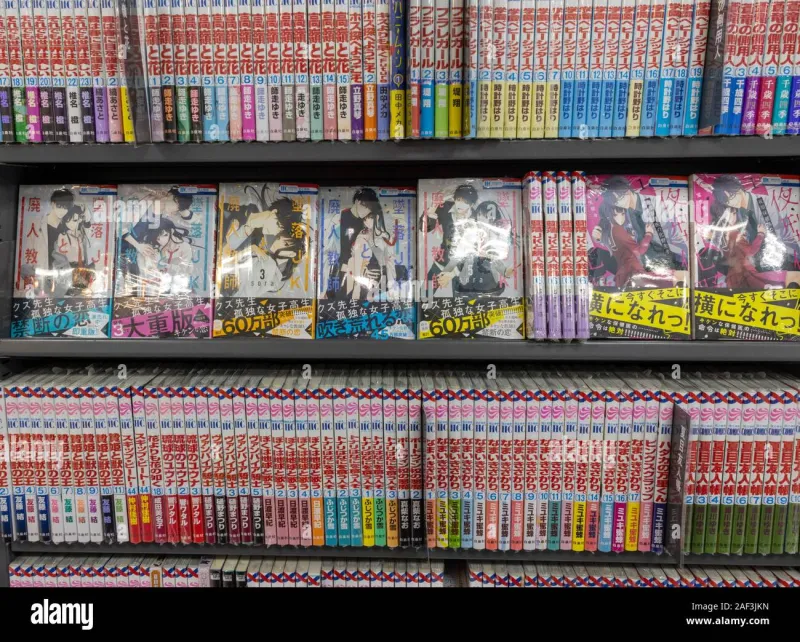
Photo: manga volumes bookshelf collection Japanese comics, via c8.alamy.com
Somewhere on a bookshelf in an apartment in the US right now, there are four volumes of a manga series that will never be officially completed in English. The reader who bought them probably already knows this, even if they haven't fully accepted it. They check the publisher's release schedule every few months out of habit. The listing is still there. The release date just keeps moving, or stops appearing altogether.
This is one of the quieter crises in American manga fandom, and it's been going on long enough that most fans have just absorbed it as a background condition of the hobby. Publishers acquire licenses. Publishers sometimes fail to follow through. Readers get left holding incomplete stories. It's almost normalized at this point — which is exactly why it's worth looking at directly.
How a License Becomes a Liability
The acquisitions side of manga publishing looks simple from the outside. A US publisher licenses a title from a Japanese rights holder, translates it, and sells it to American readers. The complications start the moment you look at the economics underneath that process.
Licensing fees are paid upfront, often before anyone knows how the title will perform in the American market. Translation, lettering, editing, and print costs stack on top of that before a single copy hits shelves. For a mid-tier title — not a Demon Slayer, not a One Piece, but the kind of series with a passionate niche following and modest sales — the math can turn negative very quickly.
When a series underperforms in its early volumes, publishers face a structural problem. The license is already paid. Abandoning the project means eating those costs with nothing to show for it. Continuing means investing more money in a title that's already demonstrated it won't generate strong returns. Neither option is good, and publishers frequently choose a third path: just stopping without any official announcement, leaving the release schedule to quietly go blank.
The result is what fans have started calling "license limbo" — a state where a series is technically still under license (meaning no other publisher can pick it up), but hasn't seen a new volume in years and almost certainly won't.
The Series Sitting in Limbo Right Now
The list of titles that have stalled out mid-run is longer than most casual readers realize. Some of these are relatively obscure properties that never found a wide audience. Others are genuinely beloved series with dedicated fanbases who followed them over from their original Japanese run, only to hit a wall somewhere around volume eight or twelve.
Light novel licenses follow the same pattern, arguably with even less accountability. The light novel market in the US has always been smaller than the manga market, and the gap between what gets licensed and what gets completed in English is proportionally larger. Readers who got invested in a particular isekai or fantasy series through its anime adaptation often discover that the source material they wanted to explore exists in English for only the first few installments — and then just stops.
The frustration is compounded by the fact that these titles are frequently still being published in Japan, sometimes with dozens of volumes already complete. The story exists. The ending exists. It's just not accessible in English through any official channel.
What Publishers Actually Say About It
Publishers are understandably reluctant to discuss specific titles that have stalled. The official language tends toward phrases like "we're evaluating the schedule" or "we remain committed to the series" — language that technically says nothing while avoiding a direct acknowledgment that the project has been shelved.
What does come through in industry conversations is a consistent set of pressures. The direct market (comic shops) and the book market (chains and online retail) have different ordering patterns that make predicting demand genuinely difficult. A title that performs well in one channel might underperform in the other. Streaming anime has accelerated interest in source material in ways that are hard to anticipate at the licensing stage — a series that seemed like a modest bet when it was acquired can suddenly have a much larger potential audience after an anime adaptation drops, but the publisher might already be committed to a production schedule that can't scale quickly enough.
There's also the rights holder relationship to consider. Japanese publishers and creators have their own expectations about how their properties will be handled in foreign markets. When a US publisher wants to drop a title, that conversation with the Japanese licensor can be complicated — sometimes it's easier to let a license expire quietly than to formally return it, which contributes to the limbo problem.
The Fan Response, and Its Complications
American manga fans have developed their own infrastructure for dealing with abandoned licenses, and it's worth being direct about what that infrastructure is: scanlations. Fan translation groups have been completing the stories that publishers left unfinished for as long as there have been abandoned licenses, and for many readers, scanlations are simply the only available path to a complete story.
This creates a genuinely uncomfortable dynamic. The argument that scanlations harm the industry has real weight when applied to currently licensed, actively published titles — a reader who downloads scanlations instead of buying official releases is directly reducing the revenue that keeps official publishing viable. But the argument gets much harder to sustain when applied to titles that have been effectively abandoned, where no official English version exists or is forthcoming. The harm to the publisher is largely theoretical; the benefit to the reader is concrete.
Fan communities have also developed elaborate tracking systems for monitoring license status — databases that log the last official release date for stalled titles, flag when licenses appear to have expired, and identify when titles have been picked up by new publishers. This kind of collective knowledge management is a direct response to the opacity of how publishers handle abandoned licenses.
Occasionally, a title in limbo does get rescued. A publisher closes and another acquires its catalog. A series gets a new anime adaptation that makes it commercially viable again. A digital-first publisher picks up the rights and completes the run without print editions. These rescues happen often enough to keep hope alive, but not often enough to make limbo anything other than what it usually is: an ending that never gets written in English.
What This Means for Your Bookshelf
If you're building a manga collection in the US right now, the practical reality is that some percentage of what you're buying will never be officially completed. That's not a reason to stop buying — supporting official releases is still the mechanism that keeps the industry functioning and keeps more titles coming over. But it's worth going in with clear eyes.
The series most at risk tend to be mid-tier titles from publishers without deep catalogs, light novel adaptations without ongoing anime support, and older licenses that were acquired during licensing booms and never quite found their audience. If a series you love fits that profile, it might be worth checking the release history before assuming the next volume is definitely coming.
The gap between what gets licensed and what gets finished isn't going to close on its own. It's a structural feature of how the business works, not a bug that's going to get patched. Knowing that doesn't make the incomplete bookshelf any less frustrating — but it does make the frustration feel a little less personal.