From Punchline to Prestige: How English Anime Dubs Grew Up and Divided Us Along the Way
There's a scene burned into the memory of basically every American anime fan who grew up in the early 2000s — some wildly mistranslated line, a voice performance that sounded like the actor had never seen the script before walking into the booth, and dialogue so stiff it could've been used as a ruler. Dubs were, for a long time, the thing you apologized for. You watched them because you were a kid without subtitles patience, and then you grew up, discovered fansubs, and never looked back.
Except that story has a sequel now, and it's a lot more complicated.
The Dark Ages Were Real (But Worth Understanding)
To be fair to the dubs of yesteryear, the conditions that produced them were rough. Localization budgets were thin, turnaround times were brutal, and the cultural expectation — at least from the studios licensing these properties — was that American kids weren't discerning enough to care. The result was a wave of productions that prioritized getting something on shelves over getting it right.
There's also the translation philosophy of the era to consider. Early dubs weren't just re-recorded — they were often actively rewritten. Characters got renamed, cultural references got bulldozed into American equivalents, and anything that felt "too Japanese" for a presumed mainstream audience got sanded down. It wasn't malicious, exactly. It was a business decision made by people who genuinely didn't understand the audience they were serving.
And that audience noticed. The rise of internet fan communities in the late '90s and early 2000s gave sub purists a platform, and they used it loudly. The "sub vs. dub" debate wasn't just about audio preferences — it was about cultural authenticity, about respecting the source material, about whether you were a real fan or just a casual who didn't want to read.
The Economic Shift That Changed Everything
Here's where the story gets interesting. The streaming era didn't just change how people watch anime — it changed what was financially possible for the people making English versions of it.
When Funimation, Sentai Filmworks, and later Crunchyroll started competing for licensing deals on a global scale, the math changed. Bigger budgets meant more rehearsal time, better casting calls, and the ability to actually hire voice actors who had built real careers in animation and games. Studios in cities like Houston, Los Angeles, and Dallas started developing genuine talent pipelines. Voice directors got more creative latitude. Adapters — the writers who craft English scripts — started being treated less like glorified transcriptionists and more like actual collaborators.
The results were hard to ignore. Productions like Fullmetal Alchemist: Brotherhood, Cowboy Bebop, and Trigun had English casts that weren't just serviceable — they were, by many accounts, genuinely great. Vic Mignogna's Edward Elric and Steve Blum's Spike Spiegel became reference points for what a dub performance could be. More recently, dubs for shows like Vinland Saga, Demon Slayer, and Jujutsu Kaisen have earned serious praise even from the sub-first crowd.
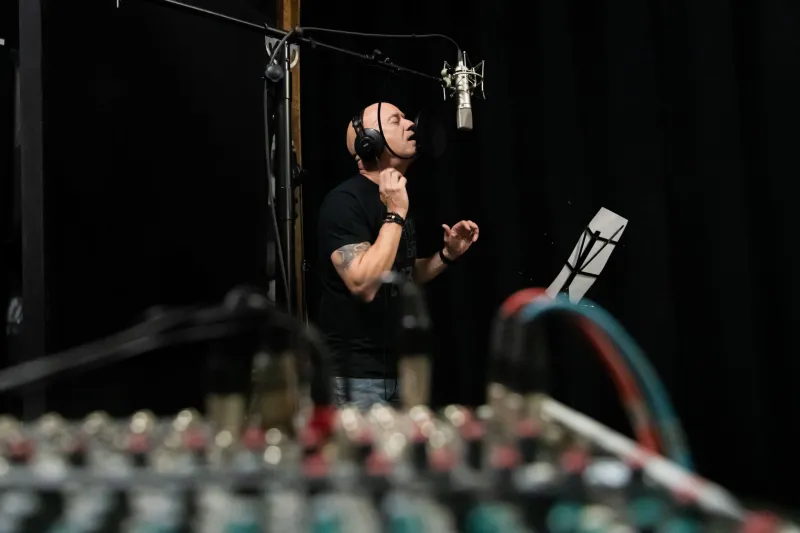
Voice actors who came up through this newer era talk about a fundamentally different work environment. The booth culture has shifted. There's more emphasis on emotional truth over technical lip-sync matching, more willingness to let a performance breathe. It's not perfect — tight turnaround schedules still create compromises — but the ceiling is dramatically higher than it used to be.
What Gets Lost (And Why Some Fans Still Won't Budge)
Here's the thing though: even the best English dub is still a translation, and translations always involve choices. And for a segment of the fanbase, those choices will always feel like losses.
Part of this is about performance texture. Japanese voice acting — seiyuu culture — has its own deeply developed tradition, its own emotional registers, its own relationship with the material. When a seiyuu like Nana Mizuki or Hiroshi Kamiya delivers a line, they're working within a performance context that's been built over decades of craft and genre expectation. Replicating that in English isn't just a matter of finding someone who can hit the right notes — it's about bridging two entirely different performance cultures.
There's also the question of localization philosophy. When adapters take liberties — and they do, even the good ones — they're making judgment calls about what a line means versus what it says. Sometimes those calls land beautifully. Sometimes they introduce a joke that doesn't exist in the original, or flatten a nuance that took the Japanese script real care to construct. Sub purists aren't wrong to notice this. They're paying attention to something real.
And then there's the regional preference dimension. Anime fandom in the US has always had a complicated relationship with its own Americanness. For a lot of fans, part of the appeal of anime is that it isn't American — it's a window into a different culture, a different set of aesthetic values, a different way of telling stories. Watching in Japanese, even imperfectly, preserves some of that distance. Watching in English collapses it.
The Fandom Split That Isn't Going Anywhere
What's genuinely fascinating about where we are now is that the old hierarchy has flattened without disappearing. It used to be simple: serious fans watched subs, casuals watched dubs, and everyone knew where they stood. Now you've got dedicated sub fans who will fully admit that the Cowboy Bebop dub is a masterpiece. You've got dub fans who switch to subs for certain shows because they know the English cast isn't the right fit. The positions are messier, more personal, more situational.
Streaming has accelerated this. When Crunchyroll drops a new season and the dub lags several weeks behind, sub-or-wait becomes a genuine lifestyle choice. Fans who grew up on dubs are increasingly comfortable reading subtitles because the alternative is spoiler season. Meanwhile, casual viewers who discover anime through Netflix or Hulu often encounter the dub first and build their entire relationship with a show around those performances.
Neither camp is going away. And honestly? That's fine. The diversity of entry points into anime fandom has always been a feature, not a bug.
Where Does This Leave Us?
The dub vs. sub debate used to feel like it had a correct answer. Now it mostly feels like a matter of what you're optimizing for — immersion, accessibility, performance quality, cultural authenticity, or just the version that got you hooked first.
What's undeniable is that English voice acting for anime has genuinely leveled up. The punchline era is over, or at least it should be. The people doing this work now are serious artists operating in a medium that finally takes them seriously back. Whether you watch in Japanese or English, that's worth acknowledging.
The fandom being split on this isn't a failure. It's proof that enough people care deeply enough to have strong opinions. And in anime fandom, strong opinions are basically the love language.