From Iron Giants to Living Metal: How Steel Became the Soul of Anime's Greatest Machines
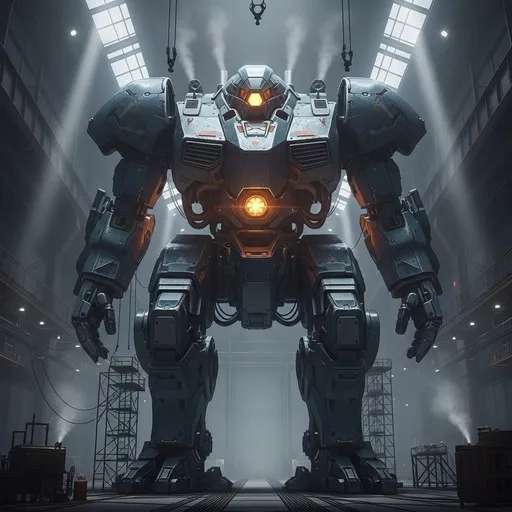
Photo: giant mecha robot anime steel armor glowing cockpit dramatic, via images.stockcake.com
If you've spent any real time in the anime fandom — whether you stumbled in through Gundam Wing on Cartoon Network as a kid or binged Darling in the FranXX last weekend — you've felt it. That specific kind of awe when a massive mechanical figure rises from the dust, joints grinding, armor catching light. It's not just spectacle. There's meaning baked into every rivet.
The Japanese word tetsu (鉄), meaning iron or steel, carries cultural weight that goes way beyond its dictionary definition. In Japan, steel has historically represented endurance, discipline, and transformation — qualities hammered into samurai blades and temple bells alike. When anime creators started building fictional worlds in the mid-20th century, they didn't leave that symbolism at the door. They welded it directly into the genre that would define Japanese animation for generations: mecha.
The Foundation: Giant Robots as National Metaphor
Let's go back to where it all started. Tetsujin 28-go (known in the US as Gigantor) hit Japanese screens in 1963, and the name alone tells you everything. "Tetsujin" literally translates to "Iron Man" — and this wasn't a coincidence. Postwar Japan was in the middle of an industrial rebirth, and the image of a massive steel protector guided by a small boy resonated deeply with a society rebuilding itself from rubble.
Then came Go Nagai's Mazinger Z in 1972, and the formula shifted dramatically. Suddenly the pilot wasn't just controlling the machine from outside — he was inside it, connected to it. The steel wasn't just armor anymore; it was an extension of the human body. Nagai essentially invented the concept of the Super Robot as a prosthetic for human will. That idea sounds simple, but it fundamentally changed how anime would portray machines for the next fifty years.
What's wild is how much of this translated to American audiences without them even realizing it. When Voltron (adapted from Beast King GoLion) landed on US TV in 1984, kids weren't thinking about postwar industrial metaphors. They were just losing their minds over five lions combining into one giant warrior. But the emotional logic — unity creating strength, steel as a symbol of collective human spirit — was doing its work underneath the surface.
The Real Robot Revolution and the Weight of Metal
The late 1970s brought a seismic shift. Yoshiyuki Tomino's Mobile Suit Gundam in 1979 didn't want its robots to feel mythic. It wanted them to feel heavy. The Gundam suits rusted. They ran out of fuel. Pilots died inside them. Steel stopped being a symbol of invincibility and became a symbol of vulnerability — of humans strapping themselves into fragile metal coffins and hoping for the best.
This "Real Robot" movement recontextualized tetsu entirely. The steel wasn't protecting you from the world; it was barely keeping the world out. Series like Macross, Patlabor, and eventually Neon Genesis Evangelion pushed this further and further. By the time Hideaki Anno unleashed Evangelion in 1995, the Evas weren't even really machines anymore — they were biological entities wrapped in armor, screaming things that machines aren't supposed to scream. The steel had become a cage.
For American fans who caught Evangelion through fansubs or Adult Swim's legendary late-night run, this was genuinely disorienting in the best possible way. Nobody expected a giant robot show to make them question their own psychological defenses. But that's exactly what Anno intended — the armor we build around ourselves is both protection and prison.
Modern Steel: Personality, Identity, and Transformation
Fast-forward to the 2000s and 2010s, and the relationship between anime characters and steel gets even more personal. Fullmetal Alchemist — and its 2009 Brotherhood remake, which most US fans rightly consider one of the greatest anime ever made — puts the metaphor front and center in its title. Edward Elric's automail arm isn't just a cool prosthetic; it's a daily reminder of sacrifice, guilt, and the cost of reaching beyond human limits.
The "fullmetal" of the title works on multiple levels. It's Edward's nickname, sure, but it's also a statement about what it means to be partly mechanical in a world that values wholeness. His steel arm is simultaneously his greatest asset and the thing that marks him as incomplete. That tension — steel as strength and as wound — is pure tetsu philosophy.
More recently, series like Darling in the FranXX, 86, and Aldnoah.Zero have continued wrestling with these themes, often with a bleaker outlook. In 86, the mechs called Juggernauts are deliberately designed to look disposable — cheap, skeletal, almost insultingly fragile. The steel here is a statement about how the society deploying these machines views the pilots inside them. It's not protection; it's a coffin with a targeting system.
Why This Matters to Western Fans
Here's the thing that makes tetsu symbolism particularly interesting from a US perspective: Americans have their own complicated relationship with steel. Pittsburgh's identity, Detroit's rise and fall, the mythology of the blue-collar worker — steel runs through American cultural consciousness too, just differently.
When US fans connect with mecha anime, part of what they're responding to is a mirror held at a slightly different angle. The Japanese framing of steel as spiritual discipline meets the American framing of steel as labor and endurance, and something clicks. It's why Gundam has found a passionate American audience despite being deeply rooted in specifically Japanese anxieties. The emotional vocabulary of metal translates.
The recent boom in mecha adjacent content — Pacific Rim owes an enormous debt to this lineage, and its director Guillermo del Toro has said as much — shows that Western creators are actively learning this language. The drift mechanic in Pacific Rim, where two pilots must mentally synchronize to control a Jaeger, is basically Tomino's co-pilot philosophy run through an American action blockbuster filter.
Steel as Storytelling
At the end of the day, the reason tetsu symbolism keeps showing up in anime across every decade isn't nostalgia or formula. It's because steel genuinely works as a storytelling device. It externalizes internal states. A character who wraps themselves in armor — literal or metaphorical — is a character with something worth protecting, or something worth hiding.
The best mecha anime understand this instinctively. They know that the giant robot is always, on some level, a self-portrait. The steel reflects the pilot. And the pilot reflects us.
Next time you watch something clang and spark across your screen, take a second to appreciate the craft behind the chrome. Those animators aren't just drawing cool robots. They're continuing a conversation about what it means to be human in a world that sometimes demands you become something harder.